Do Introverts Actually Recover Slower From Group Workouts?
Quick Answer: It’s usually not physical recovery that’s slower — it’s social energy depletion running alongside physical exertion, and the two get confused because they hit at the same time. Introverts commonly report needing dedicated quiet recovery time after group workouts that extroverted training partners don’t need, even at identical physical intensity.
After a class, your extroverted friend wants to grab coffee and chat about the workout. You want to go home and not talk to anyone for an hour. If that’s a familiar pattern, here’s what’s actually going on — because it’s probably not your fitness level.
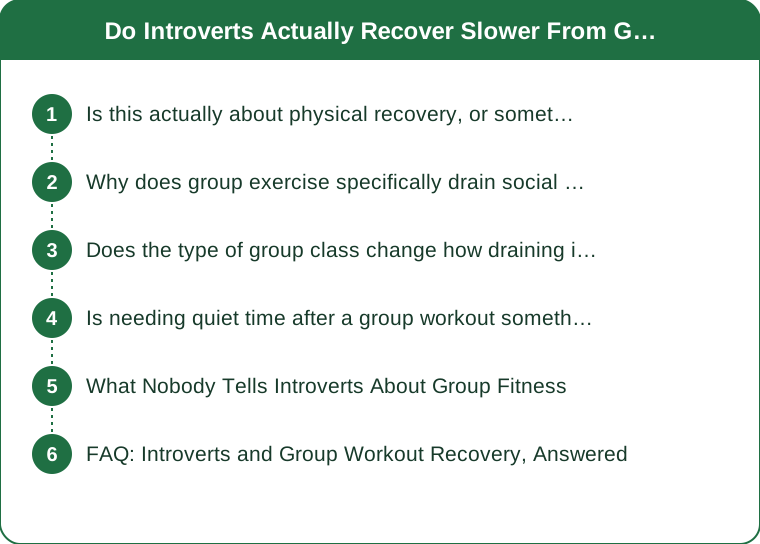
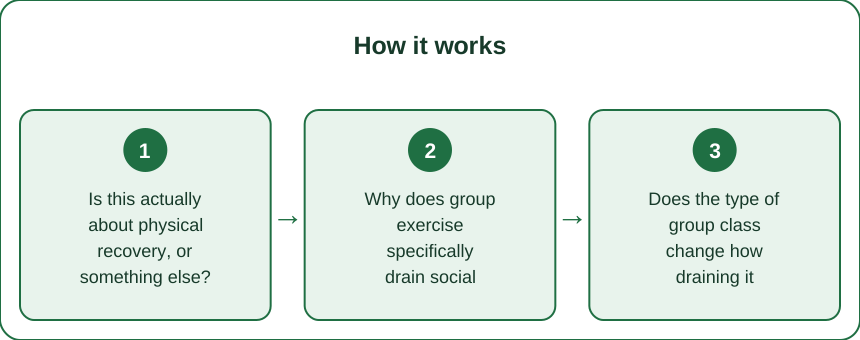
Is this actually about physical recovery, or something else?
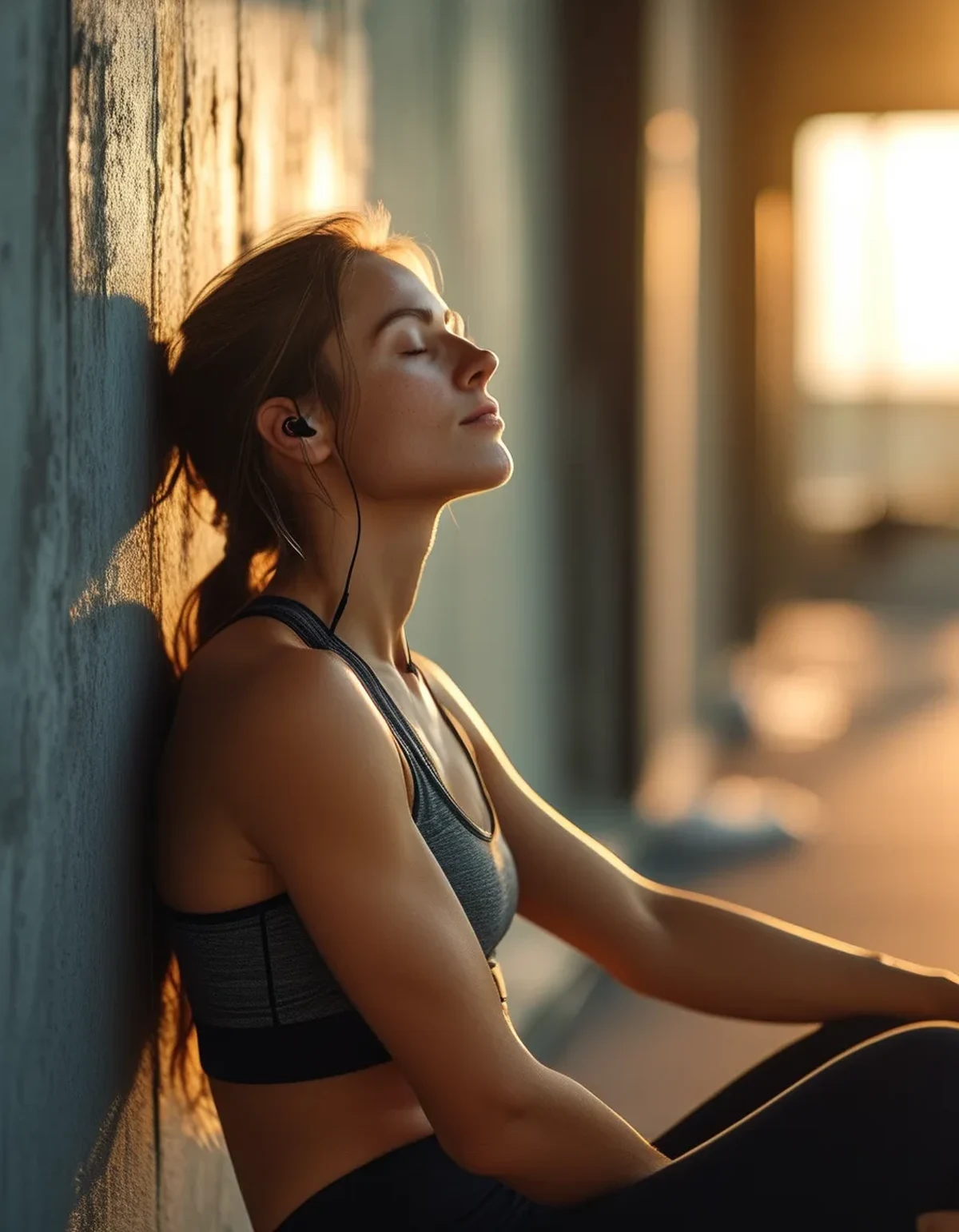
Mostly something else. Physical recovery markers (muscle soreness, heart rate return to baseline) don’t reliably differ between introverts and extroverts doing the same workout at the same intensity — the research on introversion doesn’t support a physical recovery difference. What differs is social energy expenditure, a separate resource entirely, that gets spent alongside physical energy during a group class and often gets misattributed to the workout itself rather than the group setting.
Why does group exercise specifically drain social energy?
Group fitness classes involve continuous low-level social processing — reading the room, matching energy with an instructor and group, sometimes small talk before or after — that a solo workout doesn’t require at all. For introverts, whose nervous systems are generally understood to find external stimulation more taxing to process at length, this ongoing social layer is a real cost running in parallel with the physical one, not an imagined one.
Does the type of group class change how draining it feels?
Significantly. Classes with less required social interaction (quiet flow yoga, a spin class in a dark room with minimal talking) tend to feel far less draining than classes built around partner work, verbal callouts, or extended pre/post-class socializing — even at identical physical intensity. This is a useful diagnostic: if a low-interaction class leaves you feeling fine but a high-interaction class of similar physical difficulty wipes you out, that’s strong evidence it’s social load, not fitness level, driving the fatigue.
Is needing quiet time after a group workout something to fix?
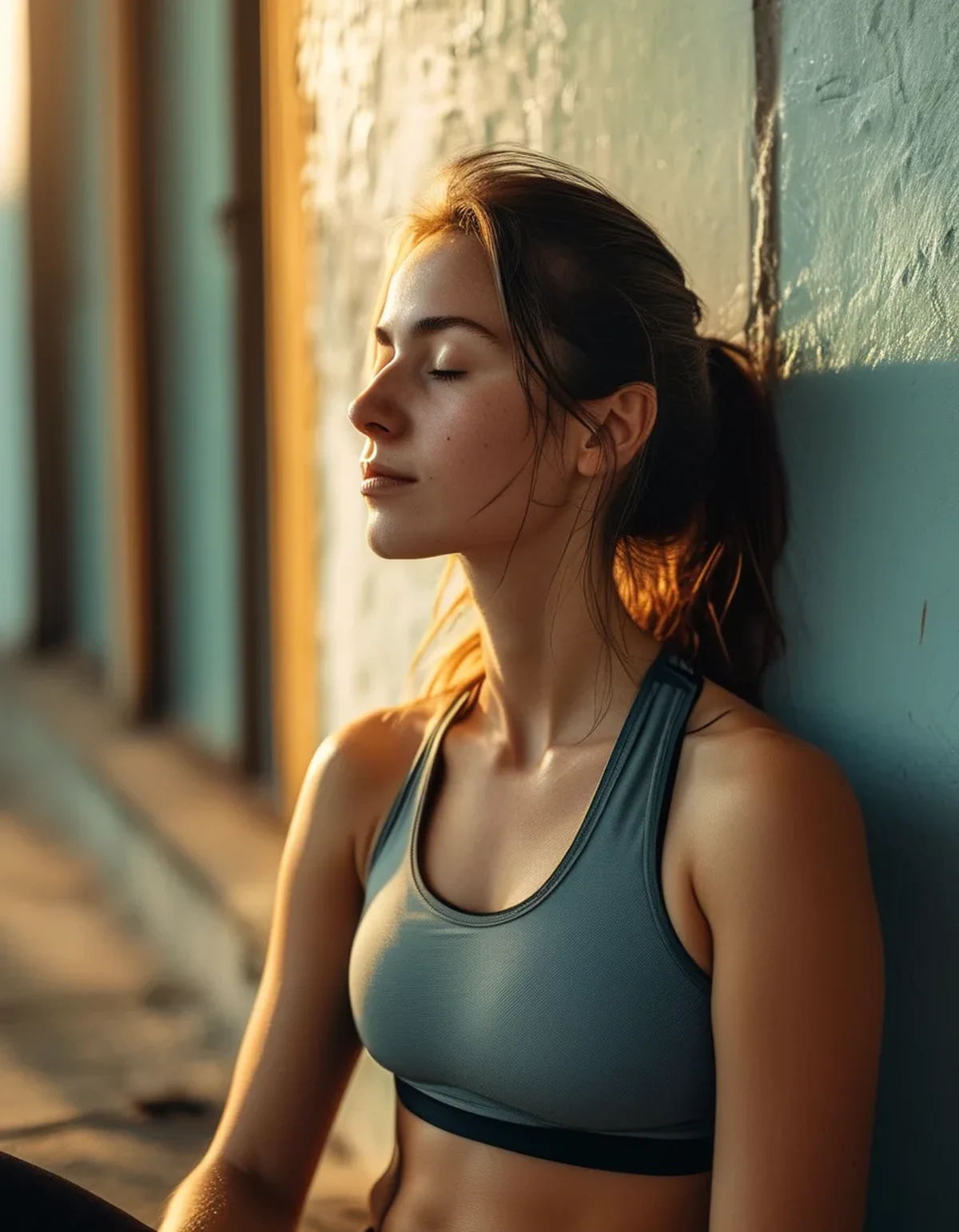
Not really — it’s a legitimate recovery need, not a flaw to train away. Treating post-class quiet time as a real, planned part of the workout (the same way you’d plan a cooldown stretch) rather than something to push through tends to work better than trying to build tolerance for more socializing through sheer repetition, which research on introversion generally doesn’t support as an effective long-term strategy anyway.
What Nobody Tells Introverts About Group Fitness
The fitness industry’s default social format (high-energy instructor, group callouts, post-class mingling) is genuinely not neutral — it’s built around extroverted engagement patterns as the assumed default, and introverts opting for less social formats (solo training, small low-key classes, home workouts) aren’t avoiding fitness, they’re choosing a format that doesn’t tax a separate resource unnecessarily. This distinction rarely gets named explicitly in fitness spaces, which is part of why introverts sometimes internalize group-class fatigue as a personal failing rather than a predictable format mismatch.
This doesn’t mean introverts should avoid group classes entirely — some genuinely enjoy occasional group classes and the format has real benefits (accountability, structured programming, community for those who want it). The useful shift isn’t avoidance, it’s honest budgeting: treating a group class as spending both physical and social energy, planning recovery time for both, and not scheduling back-to-back social-plus-physical commitments the way an extroverted training partner might handle without issue.
FAQ: Introverts and Group Workout Recovery, Answered
Why do I feel more tired after a group class than a solo workout of the same intensity?
Because group classes add ongoing social processing on top of physical exertion — that’s a separate energy cost, not a sign of worse physical conditioning.
Should introverts stick to solo workouts only?
Not required, but choosing lower-interaction formats (quiet classes, off-peak gym times, solo training) more often than not tends to reduce the compounding fatigue many introverts report after highly social fitness formats.
Is needing alone time after socializing during exercise a real thing, or just an excuse?
It’s a well-documented pattern in research on introversion generally, not specific to fitness — the need for recovery time after extended social engagement is a real and common trait difference, not an excuse.
TL;DR:
- Physical recovery doesn’t reliably differ between introverts and extroverts at the same workout intensity
- What’s actually draining is social energy expenditure running alongside the physical workload
- Low-interaction class formats feel less draining even at identical physical intensity — a useful diagnostic
- Planning quiet recovery time after group workouts is a legitimate need, not something to train away
It was never really about fitness level — group workouts spend a second, separate kind of energy that deserves its own recovery plan.
Keep Reading
This article is for general informational and styling purposes only. Fit, sizing, and product availability may vary.