How to Avoid Small Talk After Workouts as an Introvert (Without Being Rude)
Quick Answer: Headphones in before you even reach the locker room, a short pre-planned exit line (“great session, heading out”), and timing your cooldown for a quieter stretch of the gym all cut post-workout small talk down to a friendly nod instead of a ten-minute conversation you didn’t have the energy for.
The workout itself felt fine. It’s the stretch between the last rep and the parking lot, the small talk gauntlet, that quietly drains more energy than the actual exercise did.
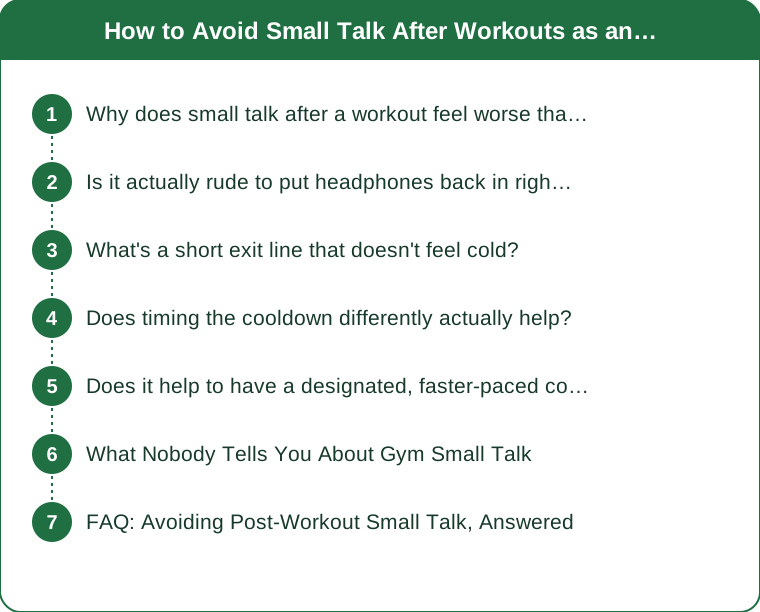
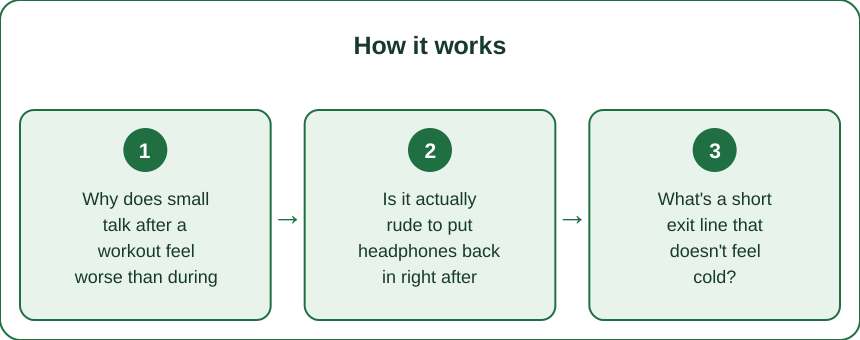
Why does small talk after a workout feel worse than during it?
During the workout, there’s a built-in excuse to not talk much — you’re breathing hard, focused, mid-set. The second the workout ends, that shield disappears, and social energy that was already spent on the exercise itself now has to cover conversation too.
This is why the cooldown stretch or the walk to the locker room often feels more draining than the hardest set of the session. There’s no more physical task to hide behind, and the timing is especially bad — it lands right when physical energy is also at its lowest point of the entire visit, which compounds how depleting even a short exchange can feel.
This isn’t a sign of being unfriendly or antisocial. It’s a fairly predictable pattern for anyone whose social battery drains with sustained interaction, and naming that pattern is usually the first step toward actually planning around it instead of just white-knuckling through it every single time.
Is it actually rude to put headphones back in right after finishing?
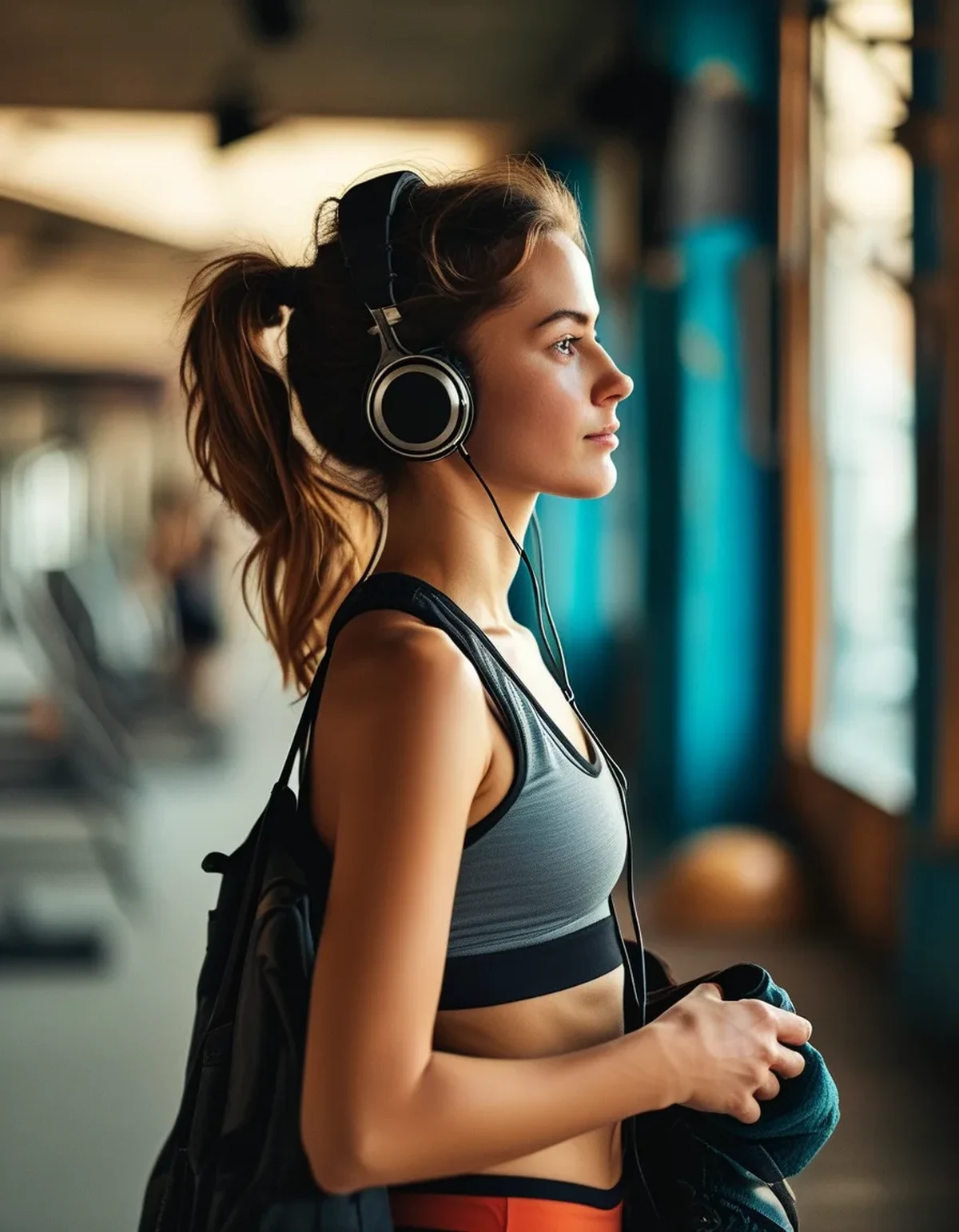
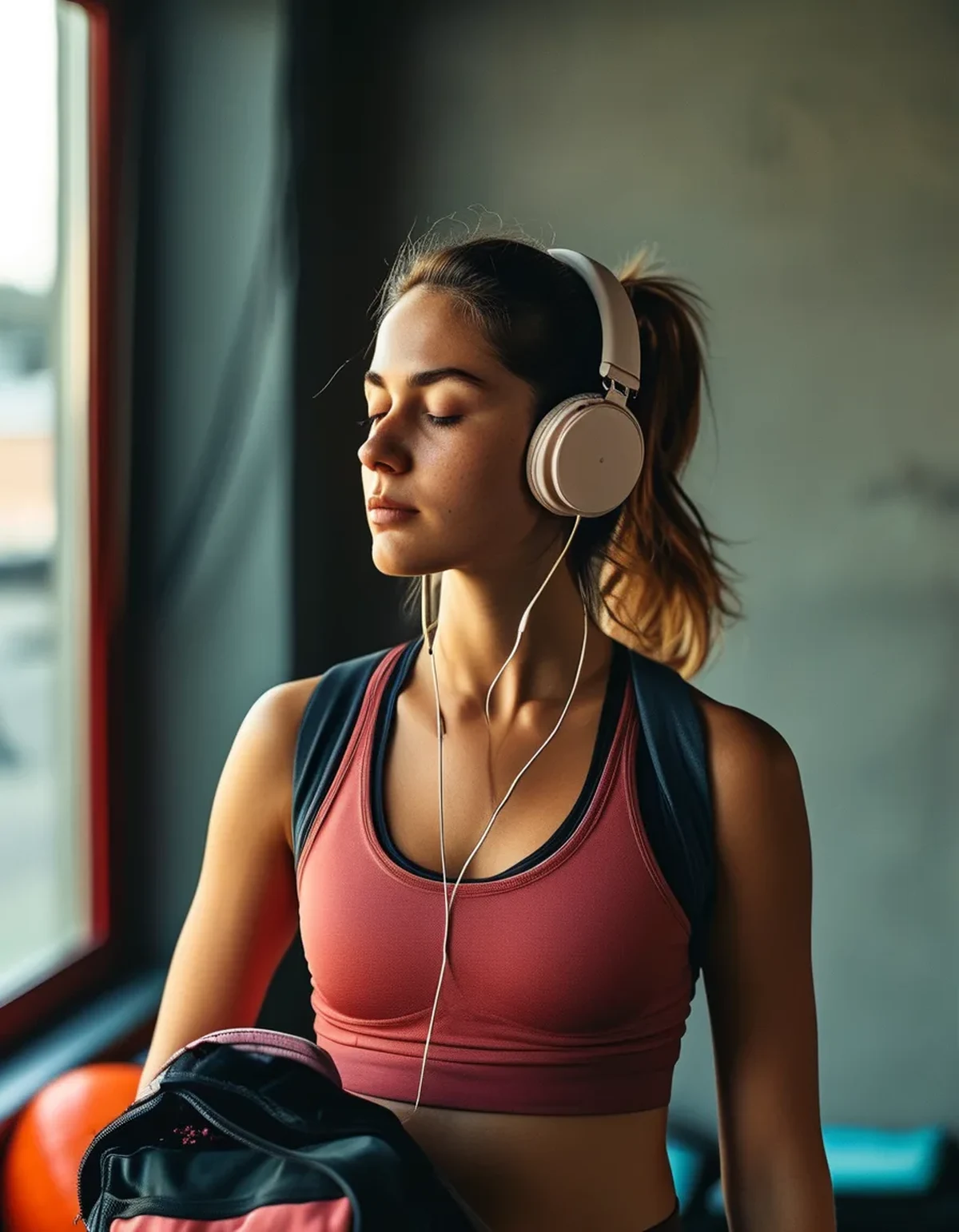
No — headphones are one of the most universally understood non-verbal signals at a gym. Putting them back in during the cooldown, not just during the working sets, signals “wrapping up, not available for a chat” without a single word needing to be said.
Most regular gym-goers read this cue correctly and won’t take it personally. The people who do try to talk anyway usually take a quick hint from a short, warm reply rather than sustained eye contact. Worth noting: the discomfort of putting headphones back in mid-conversation, worried it might read as dismissive, is almost always a bigger deal internally than it registers externally — most people barely register the gesture at all.
What’s a short exit line that doesn’t feel cold?
A single warm sentence closes the loop without opening a new conversation: “Great session, have a good one!” said while already walking toward the door does the social work in under five seconds.
The key is pairing friendly tone with forward motion. Standing still while saying it invites a follow-up question; walking while saying it signals the interaction is already ending. Having two or three versions of this line ready in advance — rotating them slightly so it doesn’t feel robotic with the same regulars — takes away the added pressure of having to improvise a graceful exit in the moment, which is often the actual source of the anxiety, not the interaction itself.
Does timing the cooldown differently actually help?
Yes — finishing the last stretch in a quieter corner of the gym, away from the main floor or front desk area, reduces the number of people positioned to start a conversation in the first place. Small talk mostly happens where foot traffic is highest.
Even shifting a cooldown routine by two or three machines, away from the main walkway, measurably cuts down on unplanned chats.
Does it help to have a designated, faster-paced cooldown for busier hours, or a non-headphone signal?
On days the gym is visibly crowded, shortening the cooldown to just the essentials (a couple of key stretches instead of the full sequence) reduces the total window of time available for someone to strike up a conversation. This isn’t about skipping recovery entirely, just recognizing that a long, leisurely cooldown in a packed gym is effectively an open invitation, while the same cooldown on a quiet day carries much less social risk. Saving the longer, more relaxed version of a cooldown routine for off-peak hours, and defaulting to a tighter one during busy stretches, is a small scheduling adjustment that meaningfully changes how many interactions happen without requiring any change in social skill or effort.
For moments headphones aren’t practical, maintaining a consistent, task-focused pace — checking a phone for the next exercise, moving briskly between stations, keeping eyes on a workout log — sends a similar signal without needing an audio cue. People generally read body language cues like pace and eye contact just as much as headphones, so the same “wrapping up, focused” energy comes through either way, and a genuinely busy-looking posture discourages most casual conversation starters far more effectively than looking idle or available.
What Nobody Tells You About Gym Small Talk
Most regulars are relieved when someone else keeps interactions short too. The assumption is that everyone at the gym wants a chat buddy, but a large share of gym-goers are there specifically because it’s one of the few places they can be around people without being expected to perform full conversation.
A short, friendly exchange is usually read as normal gym etiquette, not coldness — the anxiety about seeming rude is almost always bigger than the actual social cost. Regular gym environments actually run on a fairly narrow, well-understood band of social interaction — a nod, a brief comment, occasional small talk between sets — and very few people expect or even want it to go much further than that on a regular basis. Once that baseline expectation is understood, a lot of the pressure to perform extended friendliness quietly disappears on its own.
FAQ: Avoiding Post-Workout Small Talk, Answered
Is it weird to leave without saying bye to someone you talked to mid-workout?
A quick nod or a “see you” on the way out covers it fine — a full goodbye conversation isn’t the expected default at most gyms, even after a mid-workout exchange.
What if the same person keeps trying to start a longer conversation every time?
A consistent, friendly-but-brief pattern (same short exit line, every time) usually trains the interaction over a few weeks without ever needing an awkward direct conversation about it, since most people naturally adjust their expectations to match a pattern once it’s repeated a handful of times.
Does changing gym time slots help avoid small talk overall?
Off-peak hours reduce both the number of people around and the general chattiness of the room, since a quieter gym tends to have a quieter social norm than a packed peak-hour one, and fewer regulars around also means fewer familiar faces who might otherwise expect a longer catch-up conversation.
TL;DR:
- Headphones back in during the cooldown, not just the workout, signal “wrapping up”
- A short, warm exit line said while walking closes the loop in under five seconds
- Cooling down away from high-traffic areas cuts down on unplanned chats
- Most regulars are relieved when interactions stay short too, not offended by it
A quick nod and a genuine “have a good one” cover the social bases — the ten-minute conversation was never actually required.
Keep Reading
This article is for general informational and styling purposes only. Fit, sizing, and product availability may vary.