Managing Your Social Battery Around Group Fitness Classes
The exhaustion after a group fitness class isn’t always physical. For an introvert, a room full of chatter, high-fives, and forced small talk can drain more energy than the actual workout, and pretending otherwise leads to burnout that has nothing to do with fitness level.

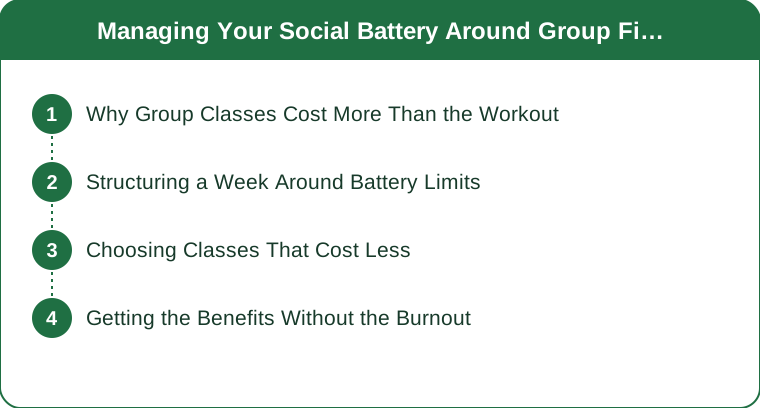
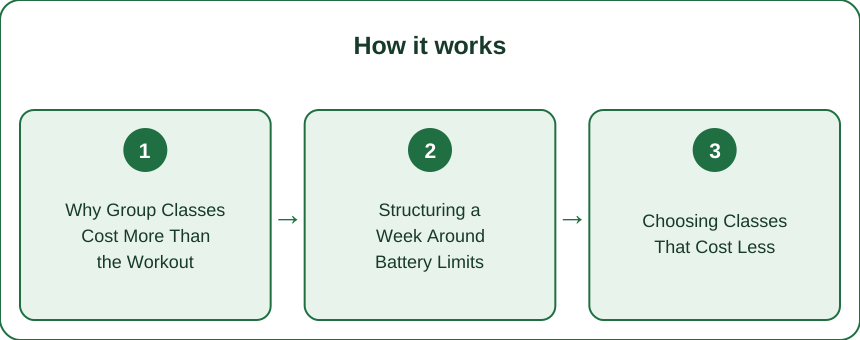
Why Group Classes Cost More Than the Workout
The real drain: the the-constant-social-processing (a group class requiring continuous low-level social processing, reading the instructor’s energy, other participants’ movements, and unspoken class etiquette, on top of the physical effort), the the-forced-interaction-tax (pre- and post-class small talk adding a social cost that has nothing to do with fitness but still depletes the same energy reserve), the the-noise-and-stimulation-load (music, group cheering, and a crowded room adding sensory input that a quieter solo workout simply doesn’t generate).
Structuring a Week Around Battery Limits
The scheduling approach: the the-one-or-two-class-cap (limiting group classes to one or two per week rather than daily, treating them as a specific social-fitness hybrid rather than the default workout mode), the the-solo-day-buffer (scheduling a solo workout day immediately after a group class to let the social battery recover before the next drain), the the-recovery-not-laziness-reframe (treating post-class quiet time as legitimate recovery rather than a sign of low motivation or unsociability).

Choosing Classes That Cost Less
The format selection: the the-low-interaction-format (choosing formats like a quiet flow yoga or a focused strength class over high-energy, partner-based, or icebreaker-heavy formats), the the-back-row-strategy (positioning in the back or side of the room to reduce the amount of direct eye contact and interaction expected during class), the the-arrive-just-in-time (arriving just before class starts and leaving promptly after, avoiding the extended social window before and after that often costs more energy than the class itself).
Getting the Benefits Without the Burnout
The balance point: the the-community-in-small-doses (getting whatever community benefit a class offers in small, chosen doses rather than maximizing social exposure to prove commitment), the the-solo-workouts-as-primary (treating solo training as the primary mode and group classes as an occasional supplement, rather than the reverse), and the frame (group fitness classes drain an introvert’s social battery independent of the workout itself — capping frequency, choosing lower-interaction formats, and building in recovery time makes them sustainable rather than exhausting.)
The fatigue an introvert feels after a group fitness class often has little to do with how hard the workout was, and everything to do with the sustained social processing a shared room demands: reading the room, managing small talk, absorbing noise and energy that a solo session never generates. None of that makes group classes off-limits, it just means they need to be budgeted like any other limited resource. Capping them at once or twice a week, choosing lower-interaction formats, positioning toward the back of the room, and building in a quieter solo day right after all reduce the cost without giving up the format entirely. The goal isn’t avoiding group fitness, it’s stopping the assumption that more classes automatically means more commitment. A sustainable routine respects the social battery as a real constraint, the same way it respects muscle recovery, and plans around it rather than pushing through it every time.
Keep Reading
This article is for general informational and styling purposes only. Fit, sizing, and product availability may vary.