Do Introverts Actually Need Group Fitness to See Real Results?
Quick Answer: No — physical progress depends on consistent, appropriately challenging training, not on the social format it happens in. Group classes offer built-in accountability and instruction, but solo training with a clear plan produces comparable results, and for many introverts, better consistency because it doesn’t carry a social energy cost.
The fitness industry treats group classes as the default ‘real’ way to train, but the actual driver of results has nothing to do with how many people are in the room.

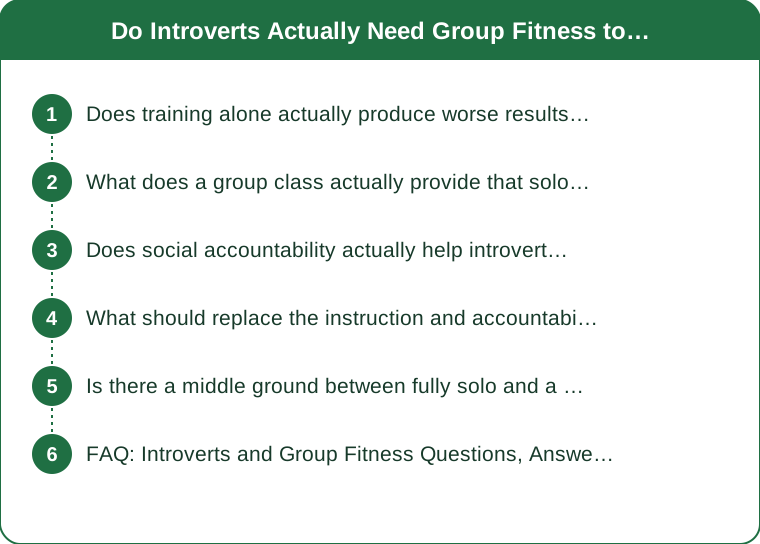
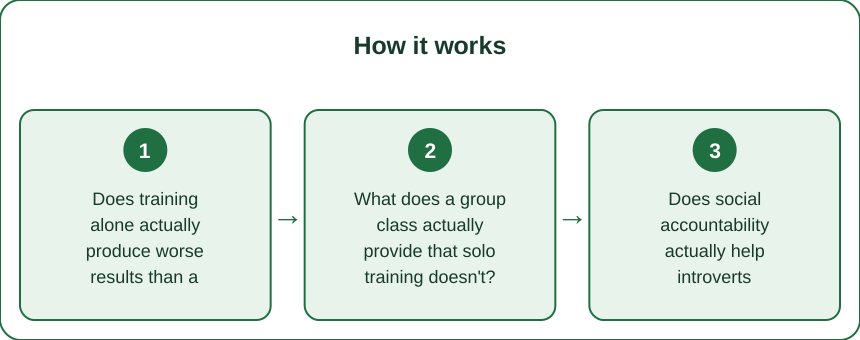
Does training alone actually produce worse results than a class?
No — strength, endurance, and cardiovascular improvements depend on progressive overload, consistency, and appropriate intensity, none of which require a group setting. A well-structured solo program produces equivalent physiological adaptation to an equally well-structured class.
What does a group class actually provide that solo training doesn’t?
Built-in structure, real-time form correction from an instructor, and external accountability are the genuine advantages of a class format — valuable for some people, but replaceable through other means like an app-based program, occasional professional check-ins, or a consistent personal schedule.
Does social accountability actually help introverts specifically, or backfire?
For many introverts, the social energy cost of a class — arriving, engaging, being observed — can offset any accountability benefit, sometimes leading to lower actual attendance consistency than a solo routine that doesn’t carry that same drain.
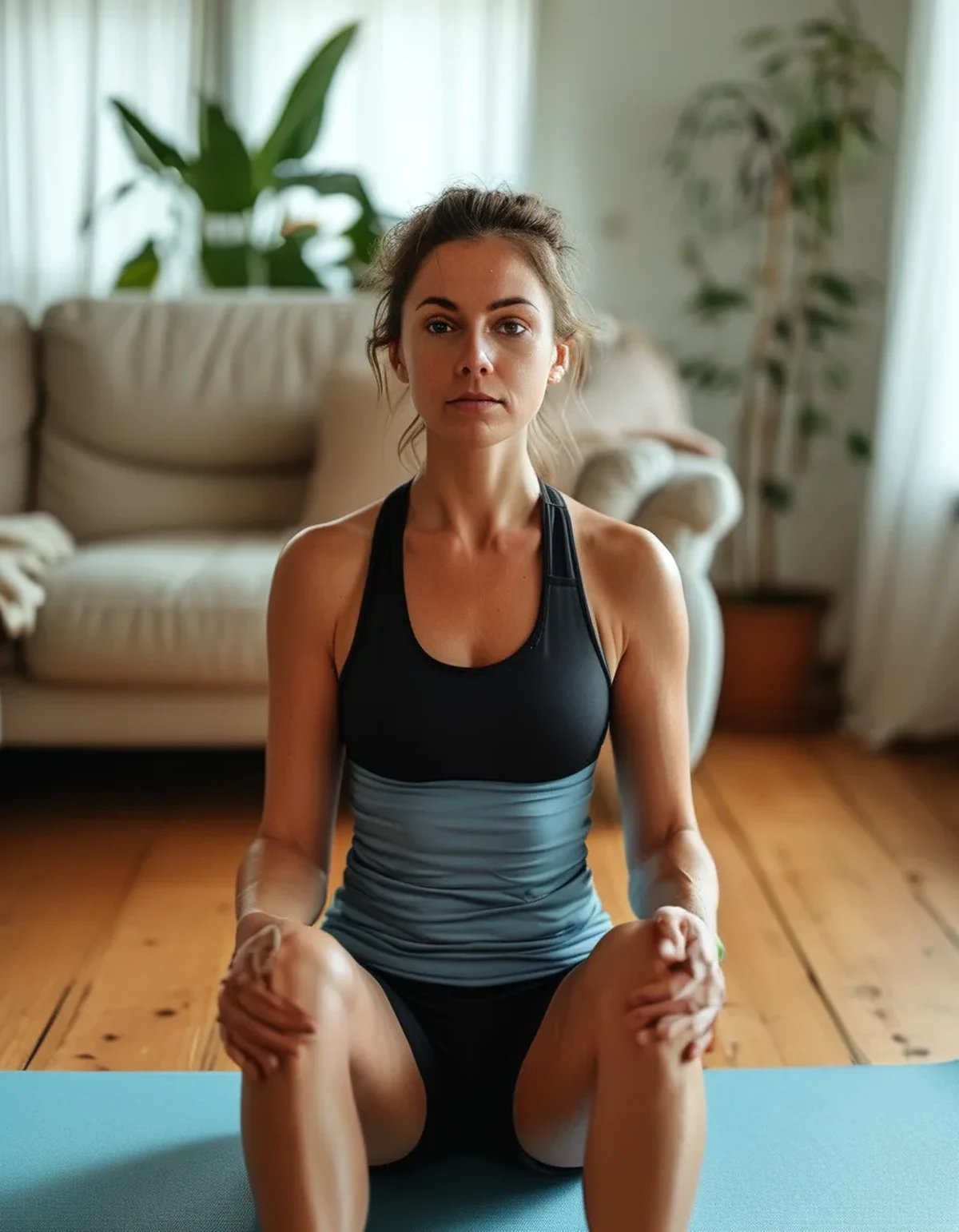
What should replace the instruction and accountability a class provides?
A written program (from an app, a trainer consultation, or a reputable source), a consistent scheduled time treated as non-negotiable, and periodic video review of your own form can substitute for a class’s real-time correction and structure without the social component.
Is there a middle ground between fully solo and a full group class?
Smaller formats — a one-on-one trainer session, a small-group class of 3-4 people, or training alongside one familiar friend — offer some accountability and correction benefits with a much lower social energy cost than a large group class.
FAQ: Introverts and Group Fitness Questions, Answered
Will I miss out on community and motivation by training alone?
Community can come from other lower-energy-cost sources — an online community, a workout log shared with one or two people, or a running or lifting app’s social features — without needing an in-person group setting.
Is it harder to stay motivated without a class’s group energy?
Some people do find external energy motivating, but many introverts report the opposite — feeling more able to focus and push themselves without the self-consciousness of being observed in a group.
Should introverts avoid group classes entirely?
Not necessarily — some introverts genuinely enjoy specific class formats or instructors; the point isn’t avoidance, it’s not treating group format as a requirement for results if it consistently drains rather than energizes.
TL;DR:
- Physical results depend on training structure and consistency, not social format
- Group classes offer instruction and accountability, both replaceable by other means
- Social energy cost can undermine a class’s accountability benefit for introverts
- Smaller formats offer a middle ground between full group and fully solo training
The format that gets you training consistently is the right one — and for a lot of introverts, that’s not a crowded class.
Keep Reading
This article is for general informational and styling purposes only. Fit, sizing, and product availability may vary.