How to Plan a Fitness Routine Around Your Social Battery
Quick Answer: Build your weekly workout schedule around your social battery the same way you’d budget money — treat high-stimulation workouts (group classes, busy gyms) as planned withdrawals that need recovery time after, and default to solo or low-stimulation formats as your baseline, adding social workouts deliberately rather than by default.
Most fitness advice treats social workouts as universally motivating. For introverts, they’re a real cost that has to be budgeted, not a free bonus.

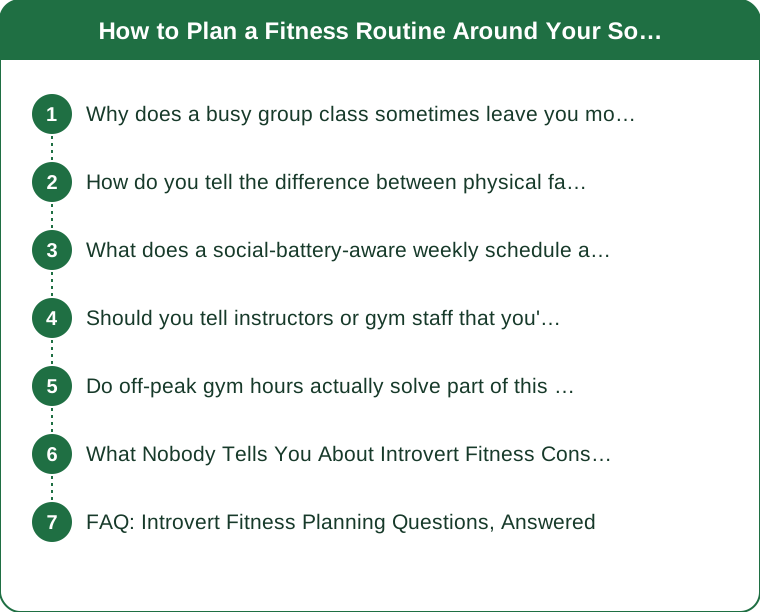
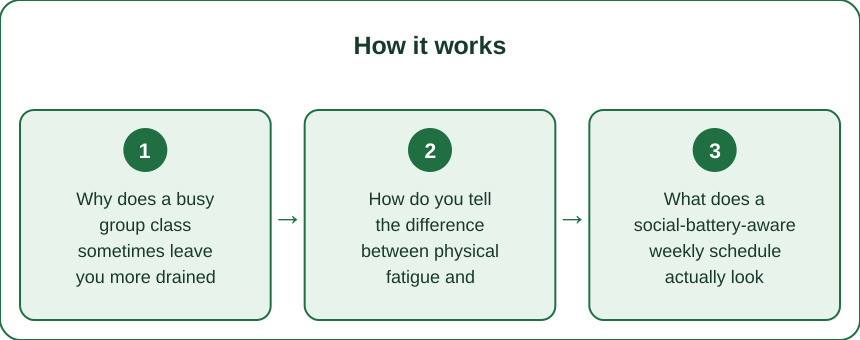
Why does a busy group class sometimes leave you more drained than the workout itself explains?
A group fitness class isn’t just physical exertion — it’s constant social processing: reading the room, matching energy, small talk before and after, and being visually observed while working out. For introverts, that social processing draws on the same limited daily reserve as any other social interaction, which is why a 45-minute class can leave you needing real downtime afterward in a way a 45-minute solo run doesn’t.
This isn’t a sign the workout was too hard physically — it’s a sign the social component used up bandwidth that has nothing to do with fitness.
How do you tell the difference between physical fatigue and social fatigue after a workout?
Physical fatigue shows up as muscle tiredness that improves with rest and food; social fatigue shows up as a need to be alone, low tolerance for more conversation, and a mentally ‘foggy’ feeling that persists even after physical recovery. If you feel physically fine but still want to avoid people for an hour after a class, that’s social battery drain, not workout intensity.
Tracking which feeling shows up after different workout types for a couple of weeks makes the pattern obvious fast — most people are surprised how consistently it maps to format, not effort level.
What does a social-battery-aware weekly schedule actually look like?
A workable structure: 3-4 solo or low-stimulation workouts (home workouts, off-peak gym hours, solo runs) as your baseline, plus 1 planned social workout you actually look forward to, scheduled on a day with nothing demanding afterward. This isn’t about avoiding all social fitness — it’s about treating it as a deliberate, budgeted choice rather than something the week defaults into.

Should you tell instructors or gym staff that you’re managing your energy this way?
You don’t need to explain anything, but a short note like ‘I prefer to keep to myself during class’ to a new instructor can prevent well-meaning but draining attempts at extra engagement. Most instructors respond well to this and will actually check in less, not more, once they know it’s your preference rather than shyness they need to coax you out of.
Do off-peak gym hours actually solve part of this problem, and what helps you recover after a social workout?
Training during off-peak hours (early morning, mid-afternoon on weekdays) reduces the ambient social load of a crowded gym even without joining a class, since fewer people means less unplanned small talk and less feeling observed. And after a higher-social workout, planning 30-60 minutes of low-input downtime afterward — no calls, minimal screen scrolling, just quiet — restores social battery faster than trying to power through the rest of a busy day, a step most people skip entirely.
What Nobody Tells You About Introvert Fitness Consistency
The common advice to ‘find a workout buddy for accountability’ can backfire for introverts, since it adds a permanent social cost to every single session rather than budgeting social workouts occasionally. Solo consistency often outperforms buddy-based accountability for introverts specifically, because it removes the daily social tax that makes buddy systems feel sustainable for extroverts but draining over time for introverts.
FAQ: Introvert Fitness Planning Questions, Answered
Is it unhealthy to prefer working out completely alone?
No — solo exercise provides the same physical benefits as group exercise, and consistency matters far more for results than whether workouts are social.
How do you build motivation without a workout buddy?
Music, podcasts, tracking apps, and personal goals work well as introvert-friendly motivation tools that don’t add social cost to each session.
What if your only convenient gym is always crowded?
Off-peak hours (early morning or 1-3pm on weekdays) are worth rearranging your schedule for if crowd-related drain is a real barrier to consistency.
TL;DR:
- Group workouts cost social battery on top of physical effort — budget for that cost deliberately
- Physical fatigue and social fatigue feel different and need different recovery
- A workable week is 3-4 solo workouts plus 1 planned social one, not the reverse
- Solo consistency often beats buddy accountability for introverts specifically
The goal isn’t avoiding social fitness entirely — it’s making it a deliberate choice instead of something your week defaults into without asking.
Keep Reading
This article is for general informational and styling purposes only. Fit, sizing, and product availability may vary.